CMI Rio 2026 Day II
NMLAs Presidents’ Breakfast
The Windsor Room in Rio de Janeiro provided the setting for this morning’s NMLAs Presidents’ Breakfast meeting, hosted by Ann Fenech, Madam President of CMI.
Bringing together Presidents and representatives of National Maritime Law Associations from across the world, the breakfast offered a valuable opportunity to reconnect, exchange perspectives, and discuss recent developments within the international maritime law community.
Part 1 | Security Interests in Containers
Moderated by Benoit Goemans, this session explored the evolving legal and commercial framework surrounding container financing and security interests in global maritime trade.
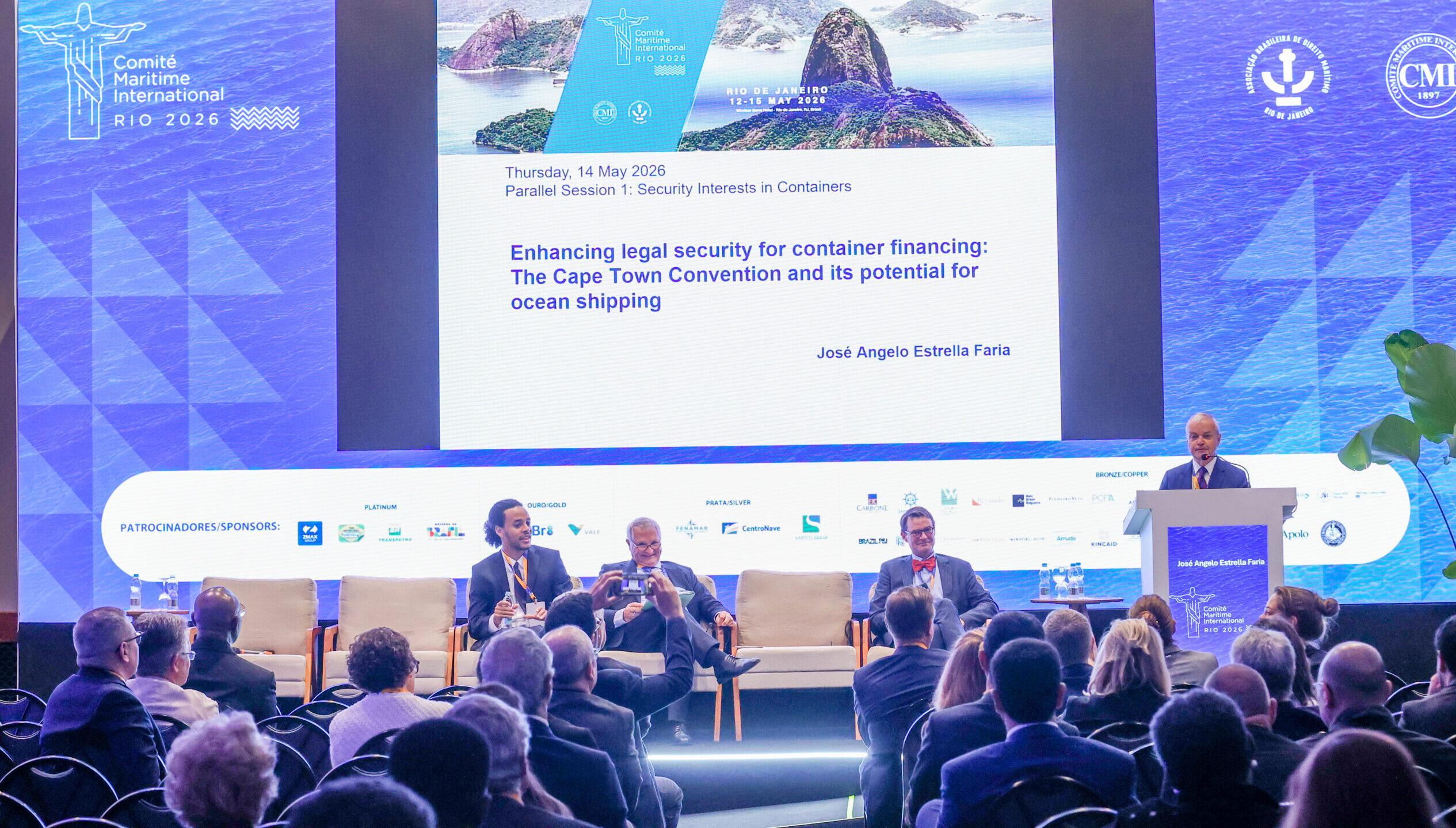
Session speakers and topics included:
• Peter Laurijssen — “Security on containers: views from the box shipping industry.”
• José Angelo Estrella Faria — “Enhancing legal security for container financing: The Cape Town Convention and its potential for ocean shipping.”
• Warren de Waegh — “The Feasibility of an International Regime for Security Interests over Shipping Containers as distinguished from Security Interests over Ships.”
The discussion highlighted the growing importance of legal certainty and harmonised approaches in supporting international trade, financing structures, and the continued development of container shipping worldwide.
Part 2 | Maritime Autonomous Surface Ships (MASS)
Moderated by Frank Stevens, this forward-looking session focused on the legal, regulatory, insurance, and operational challenges arising from the development of autonomous shipping.
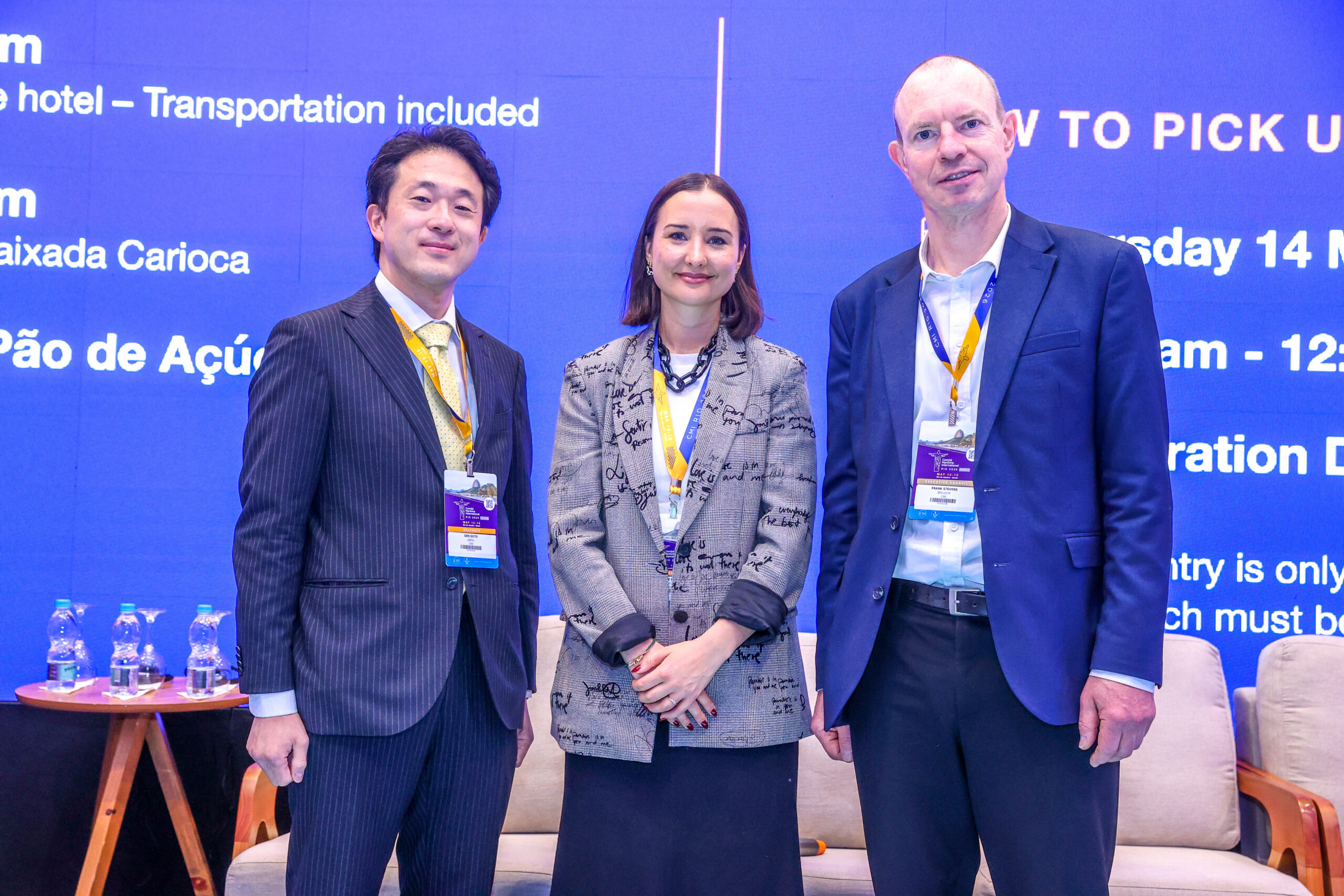
Session speakers and topics included:
• Danielle Datta — “Insurance Considerations for MASS.”
• Gen Goto — “The IMO MASS Code.”
• Liza Chua — “Building Trust in Maritime Autonomy: A Class Perspective.”
The session demonstrated how technological innovation continues to reshape the maritime industry, while emphasising the importance of international cooperation, regulation, and trust in the transition towards autonomous navigation.
Part 3 | yCMI – Intersections of Security, Geopolitics & Maritime Law in a Changing World
Moderated by Harald Søndergard, this yCMI session brought together speakers from across jurisdictions to discuss the growing impact of geopolitics, sanctions, insurance, compliance, and insolvency on the maritime sector.
Session speakers and topics included:
• Iva Parlov — “Sanctions and the “Shadow Fleet”: Does Flag State Jurisdiction and Freedom of Navigation Shield the Shadow Fleet Vessels from Liability Insurance Requirements and Enforcement by Coastal States?”
• Javier Franco — “Sanctions and legal issues in shipping: A perspective from the evolving situation in Colombia and Venezuela.”
• Morgane Roussel — “Drafting for Security Disruption in Charterparties and Bills of Lading: Decision Rights and Cost Allocation.”
• Frederico Moreira Alcântara de Siqueira — “The new Brazilian Insurance Law and its implications for the international maritime insurance and reinsurance market.”
• Anqi Song — “Compliance Challenges for Chinese Maritime In-House Counsels in a Shifting Legal Landscape.”
• Warren de Waegh — “Maritime Insolvency in an Era of Geopolitical Fragmentation: Unique Maritime Risks and International Judicial Cooperation.”
The session reflected the increasingly complex relationship between maritime law and global geopolitical developments, highlighting the importance of adaptability, cooperation, and legal resilience within the international shipping industry.
Part 4 | The CMI Lex Maritima – The Road So Far & The Way Forward
In this engaging session moderated by Eric Van Hooydonk, the floor was shared among distinguished maritime law experts including Deiter Schwampe, Werner Rizk, Tomotaka Fujita, Eduardo Adragna, Eduardo Albos and Michael Sturley, for an dynamic discussion on the development and future direction of the CMI Lex Maritima – The Tokyo Principles of Maritime Law.
The discussion explored the continuing effort towards the harmonisation of maritime law through the identification of universal maritime principles, while also addressing how the 2025 Tokyo Principles may be applied across different legal systems and jurisdictions.
Particular attention was given to the practical significance of prioritised claims, ship immobilisation, translations of the CMI Lex Maritima, and the broader role of CMI and National Maritime Law Associations in strengthening international legal cooperation and consistency in maritime practice worldwide.
The session once again demonstrated the enduring importance of dialogue between academia, practitioners, and international organisations in shaping the future of maritime law.